Religion
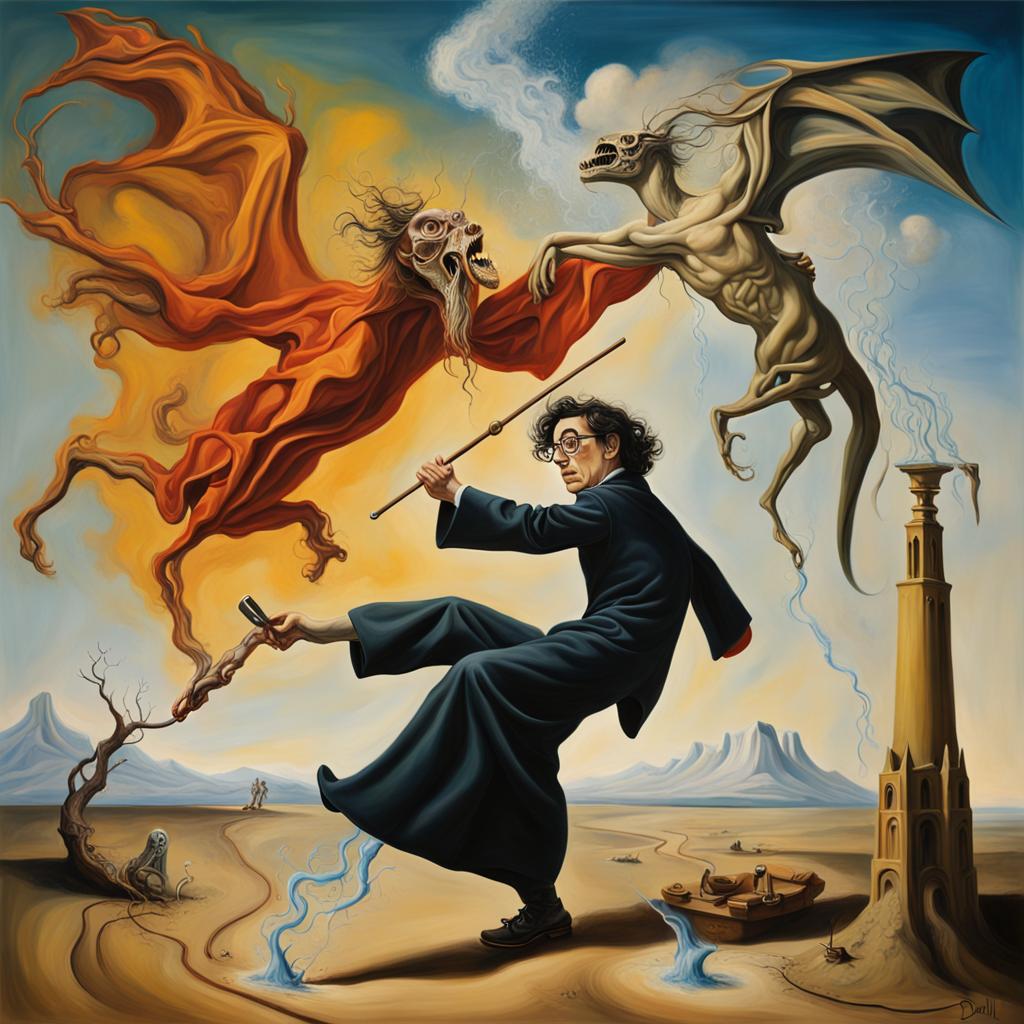
Religion
Philline gewidmet
I used to be religious. I used to believe in a God. I was raised by my parents and in my Catholic schools as a Christian, although not in a very conservative way. I mostly believed in one God, and all the other characters did not matter to me. I also did not feel the need to pray, because God knew all. But I did find the need to thank God for good things happening. And that was one of the first reasons I wanted to believe in a god, someone to thank.
But the older I got, the more I realised why I wanted to believe in a god. Because I could not accept that I would not exist after my death. I wanted to go to heaven, where I could sleep in. I needed an explanation for my existence, and I wanted the afterlife where I could meet my friends and loved ones after our deaths.
It was those things that made me want to believe.
I did all the rituals of the church, which were not too bad. I quite liked the meetings and the discussions we had in preparation for my confirmation, for example. But I really, really hated getting up early on Sunday to go to church, which I found extremely pointless. Fortunately, after some time, my parents stopped insisting that I go to church. I did read the whole Bible, mostly before sleep, which did make me sleep better.
But even at a young age I slowly became aware of the not so great sides of the church: the Spanish Inquisition, the Witch trials, the use of the church by the rich and powerful, and this was before all the sexual abuse scandals came out.
One day in a school magazine I read a story of a boy who is confronted by the fact that Santa Claus does not exist. After his mom explained this to him, he said, “That is like believing in God, right?”
And it was really like that for me. I believed in Santa Claus (its Dutch equivalent, Sinterklaas), because I wanted to believe, believe in the great gifts I would get. Rationally I knew something was not quite logical, but I made up a lot of complex constructions in which it was possible to have a Santa Claus who brought gifts to kids. I was relatively old when my mom told me that there was no Santa Claus, and I was shocked. Not because it was a surprise, but I realised how I had made up this fantasy world to overrule my rationality.
But I still believed in God.
Then I started studying at the Technical University of Delft. And in many ways, studying there, but also discussing with the people I met, made me grow my mind and my rationality. And that enabled me to accept things that I could not accept anymore.
And thus, I could accept that I would stop existing after my death. That I would never see my friends and loved ones again after our deaths. And that our entire existence might just be a glitch, or one of many.
And when I realised that, I could let go.
Later in life, I read some atheist literature, from Hitchens, Dawkins, Deschner and Russell, and that helped me cement my unbelief. I also read more and more of the horrific stories from the Catholic Church and other religious institutes, and that made me incredibly angry at organised religion. I became a bit too fanatic in my atheism for a short while. I officially gave up my religion (Kirchenaustritt) and I felt a relief. I felt that that was an important ritual for me.
But as I got older, there was a nagging feeling.
Realistically we are all agnostics. No matter how fanatically you believe or don’t, there is always a possibly tiny sliver of doubt. What if I am wrong? I of course could be wrong. So technically I am agnostic, but I do call myself an atheist, and live my life accordingly, but not dogmatically. And of course I have many friends and loved ones who are religious, for whom religion gives them support and community. As someone who used to believe, I can relate.
Then I started experimenting with psychedelics. Psychedelics did not make me more religious; in fact, it made me more convinced that there was no god in a traditional sense. But there was something else: energy, time, all part of the same fabric in the universe. And embedded in that fabric are our consciousnesses, information, emotion, beauty, and… love.
There is a part of me that still finds it hard to accept that I will stop existing after my death. And that I will never again see my loved ones and friends after our deaths.
And then there is this one horrific realisation I had. The one thing I find very hard to stomach, as an atheist: that you have only one life. And that’s it. So if you were not born, stillborn, or died quickly after birth: that’s it. If you do get born and grow up, but got a terrible disability or disease, and you die young, that’s it. If you grow up and have a horrible life of suffering, pain, abuse, disease, war, torture, and then you die… that’s it. Or you have a bit more luck, and are about to get a good life but then suddenly you die… that’s it. For a lot of people that would mean that their life was just a short spark, in some cases mostly full of suffering. That is maybe the hardest thing to accept as an atheist.
But when it comes to existence after death, I found some consolation in the fact that we exist, for a short moment, after our deaths, as information, memories, emotions in other people. And possibly in our legacy of things we created or the meetings with people. I like this idea, and that is one way of there being some kind of existence. I can live with that.
Then one day, I had a Kifftori (a portmanteau between Kiffen and 悟り). If we see time as the fourth dimension, in addition to the three spatial dimensions (not counting the Calabi-Yau dimensions), the end of our existence doesn’t mean that much. The past still exists. The only thing that changes is our focus. We go through life, and our focus moves with us throughout our life in real time, and focuses on us and our environment at that moment. And after our death, only this focus is gone.
I’ll stick to this idea. That works for me.
In the TV series The Good Place, where there is an afterlife and you could live forever until you don’t, there was this lovely ending, showing what happens if you end your existence. I will not spoil it, but it spoke to me.